As the NFL Draft approaches, we start hearing about prospects who will post elite athletic testing numbers at the NFL Combine and their pro days. Some prospects run 40-yard dashes in the 4.2s, jump over 40 inches in the vertical, and finish the 20-yard shuttle under four seconds. Those tests show rare athletic ability. The analysis, though, also turns to whether athletes can express those numbers on the field. Some elite testers lack play speed, or game speed, which leads analysts and scouts to wonder whether they process the game quickly enough. Those players can get labeled developmental prospects who need to improve their football IQ, get more snaps, or learn to let their speed show up in football.
As a sports performance coach, I am often tasked with helping athletes improve their testing numbers and their play speed. Over the past decade, I have spent more time analyzing why certain athletes get faster in training but struggle to produce that same speed in competition. Like those NFL Draft prospects, I often see a large delta between an athlete’s testing numbers and max velocities on GPS. Then I watch practice or film. I do not see indecision or a lack of awareness; I see awkward movement. Yes, clumsiness might come from processing load or pressure, but the athlete is not freezing or using the wrong technique. The movement pattern looks unstable. Yet there are no clear concerns in max-velocity training. Linear acceleration is not the issue. Strength, elasticity, and technical ability are not the issue.
What Is Adaptive Speed?
Running over mats adds a controlled constraint that challenges the athlete to keep sprint mechanics organized while adapting stride rhythm in real time.
Some coaches refer to this quality as adaptive speed: an athlete’s capacity to modify movement in real time to maintain technique and mechanics under fatigue, pressure, different play surfaces, weather, or the reactive demands of sport.
Obviously, this concerns every coach because it raises a hard question: why is the programming not transferring to sport? This is where Constraint Variation has become one of my most valuable tools. Customary sprint work builds and refines a stable pattern. Constraint variation challenges the athlete to maintain that stable pattern under slightly different conditions from the ones they see in a sports performance facility. It adds controlled curveballs to training sessions or specific drills and exercises to build movement adaptability without sacrificing technique or safety.
My goal is to provide some background on constraint variation and how I implement it in my coaching. I will also share guidelines I use when programming and coaching these sessions.
Background on Constraint Variation
When we talk about improving speed, we usually start with mechanics, force production, stiffness, and power. Those are foundational metrics, but they do not explain why two athletes with nearly identical metrics can express speed very differently under competitive conditions.
The athlete with better play speed likely has a nervous system that has adapted to stabilize movement patterns well enough to keep producing force under imperfect conditions. That athlete has better adaptive speed.
The science behind constraint variation and adaptive speed is not new. In fact, one of the most important concepts in exercise science and human biology is that we learn complex movements by making and correcting small errors. By introducing controlled, intentional variability, coaches can tap into that motor control principle.
Coaches already use many of these constraints in modern training. Athletes face realistic constraints that require self-organization. A coach presents a challenge that forces them to adapt across repetitions. The idea is simple: constraint variations in workouts, drills, and exercises build skill resilience.
Ranganathan and Newell show that variability can improve coordination so it does not break down when conditions shift. An athlete with a broader set of experiences and solutions tends to perform better in dynamic competitive environments.
These points may seem theoretical, but they apply directly to speed. When you manipulate training constraints, such as posture, visual input, surface, incline, or decline, the athlete must recalibrate mechanics while still executing at a high level. Over time, that expanded skill set reduces the athlete’s reliance on a single “perfect pattern” and gives them multiple ways to generate speed.
What Are Constraint Variations?
I know constraint variation is a technical term, but the meaning is simple: alter a small constraint inside a specific exercise or drill. In other words, change certain parameters across sets and reps. These variables are subtle and controlled. They are not random, and they should not be so large that they disrupt the athlete’s global mechanics.
Examples include:
- Posture/stance: narrow, wide, split stance, toe-up, shin-angle changes
- Visual cues: hand signal, moving object, partner movement
- Surface changes: turf, track, grass, sand, mild incline or decline
- Temporal changes: rest-interval variations, countdown timing
- Spatial orientation: starting while facing away, curve entries
Do these seem familiar?
These constraint variations are probably the same ways coaches challenge athletes, or the ways they “mix things up” after weeks of standard progressions. Implementation is key. The goal is not to make the workout harder just because variety feels productive or because athletes want proof of hard work. The goal is to expand the athlete’s Rolodex of solutions by increasing the number of viable movement options they can call on under changing competition conditions.
That ability to adapt is what transfers training to the field or court.
Constraint Variation for Adaptive Speed
When you coach speed for football, soccer, lacrosse, basketball, or any field or court sport, the limitations of conventional speed work are obvious. As I described in the NFL Draft example, athletes who look like phenoms in a lab environment may look like different players on film when they lose technical stability under game conditions.
As coaches, we should teach athletes the idealized patterns in speed work:
- Upright hip position
- Symmetrical ground contacts
- Steady pelvis
- Long torso
- Proper frontside and backside mechanics
- Stable step frequency and length
But sport rarely gives athletes the occasion to show those idealized patterns.
A linebacker working a few yards off the line of scrimmage is not sprinting with perfect mechanics because the player is preparing for contact while reacting to the offense. Even a receiver who tries to put on the afterburners is not hitting max velocity on fresh legs with perfect vision, no defensive interference, and no restrictions from pads. You can find equivalent circumstances in numerous sports.
What materializes under those game conditions highlights the athlete’s adaptive speed, or exposes the lack thereof.
When we bring these constraint variations into speed work, we should not throw random challenges at the athlete. We use them to elicit several neuromechanical adaptations:
- Proprioceptive sensitivity
- Feedforward motor planning
- Stretch-shortening reflex responses
- Intermuscular timing
- Kinematic drift
Improving these qualities allows athletes to hold technique and performance despite imperfect conditions. Boosting these attributes can support high-level speed expression in live play.
When to Implement Constraint Variation
I typically use constraint variation training primarily during general and specific preparation phases, and less often in-season.
During general prep, athletes are building strength and mobility while developing technical consistency, so some variability helps reinforce the pattern before competitive stresses show up. In specific prep, athletes are fine-tuning abilities, so constraint variation can help bridge training to competition demands.
I use constraint variation sparingly in-season and very selectively. I use it only for brief, low-fatigue exposures in more of a maintenance capacity. The training cannot stress the athlete enough to interfere with recovery or an upcoming performance. If the session no longer looks like a review, consider cutting it short. Still, constraint variation can be used year-round when carefully periodized around the athlete’s training load.
How I Implement Constraint Variation in Training
Before I introduce any form of variability, I make sure the athlete has a stable technical base. I need to see consistent projection angles, stable pelvis and trunk position, organized posture through acceleration, balanced stride timing, and appropriate stiffness at takeoff and touchdown. If an athlete is still working through these fundamentals, variability magnifies the problems instead of solving them.
Once I see competence and believe the athlete can handle constraint variation training, I start with low-amplitude changes that will not force mechanical collapse.
- 10m accelerations with a narrow or wide stance start
- First step onto a 4- to 6-inch box
- Alternating auditory cues, such as a clap, beep, or verbal “go”
- Working at a 1% to 2% incline
These slight curveballs stimulate adaptation without risking a loss of mechanical integrity.
Once the athlete establishes stability under low-amplitude changes, I expand the challenge.
- Irregular-surface accelerations
- Light band perturbations
- Partner reactive starts
- Partner shadow sprints
- Curved entries
- Agility hurdles with spacing variations
These progressions give athletes sport-like variability while preserving technical work in a controlled environment where the coach can instruct and manage the session.
I must stress that every session I run starts with a few accelerations to bring athletes to baseline, then follows with technical builds before moving on to constraint variation. This sequencing gets athletes back to their sprint form’s home position before we introduce new tasks or variability.
Coaches also need to treat this training as neurologically demanding and implement it strategically. I prioritize acceleration days, change-of-direction days, and max-velocity sessions, and I tend to place it earlier in the training week when the CNS is freshest. I do not put it on the same days as heavy lifting, high-volume days, or within 48 hours of competition. I also make sure my athletes are prepared, healthy, and arriving fresh.
Remember, we are teaching the body new ideas, and it will not learn another trick well unless the athlete is fairly fresh with a responsive nervous system.
Tips for Integrating Constraint Variation
In my experience, constraint variation training works only when it enhances an athlete’s mechanics rather than disrupts them. Coaches need basic principles to keep variability purposeful, not a waste of time and energy that increases injury risk.
Here are my guardrails.
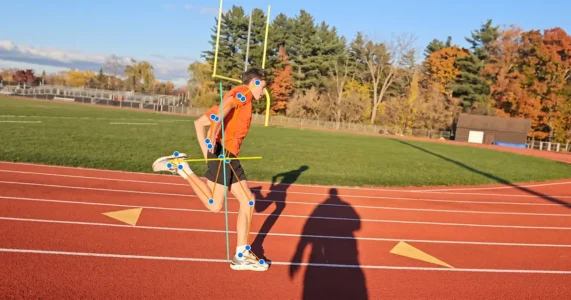
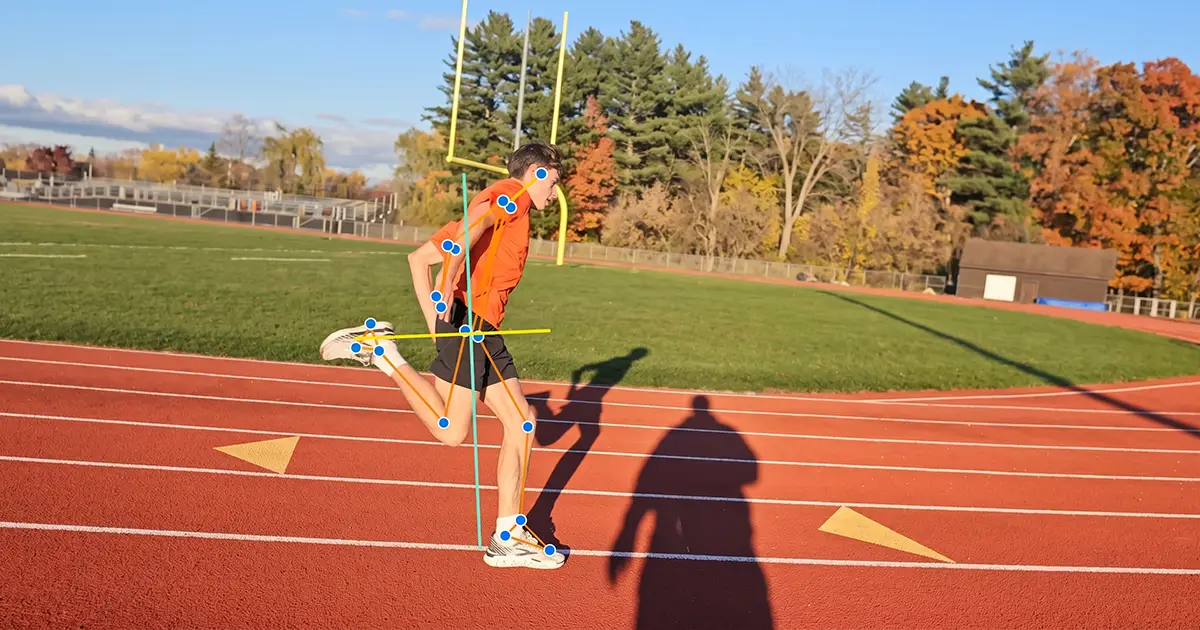
- Challenge the athlete without distorting mechanics. I like to use a motion analysis application that provides kinematic metrics during the session. Those metrics help determine whether the constraint is appropriate or whether performance is deteriorating. I like to see aggregate body angle, joint angles, and shoulder-to-hip relationships for each athlete during baseline reps. If constraint variation reps cause a deviation of more than about 15% from baseline, we adjust the constraint or choose a different one.
- Do not reduce output by more than 5%. We are challenging an athlete to maintain performance, not turning a flying 10m into a jog. A sharp drop in output means the constraint complexity likely needs to come down.
- Avoid stacking variables in the same rep. Even when the athlete can handle multiple constraints, the body tends to move toward surviving the rep rather than learning from it. One constraint on top of a standard exercise or drill should be a strong enough stimulus. I will use multiple constraints in a session, just not more than one in a single rep.
- Advance the athlete only when mechanics and output hold up. The athlete should repeatedly maintain mechanics under a constraint, keep output drop under 2%, and avoid needing excessive rest. This can guide within-session management and progression through a training phase. It helps protect transfer without compromising readiness inside the workout or for the next workout. I like to monitor sprint velocity with timing gates, or I will use a stopwatch to see whether performance drops 2% or more below baseline. If performance drops below that threshold, the constraint may be too challenging or the athlete may be fatiguing. The coach can adjust the constraint or choose a different one.
- Keep exposure small. Use a few reps per session and only a few times per week out of season, with even less in-season. That dose helps maintain adaptability without turning the session into a fatigue test.
- Keep training pointed at the sport. We are trying to improve adaptive speed so training transfers to game speed or play speed. A coach should be able to figuratively squint while watching a constraint variation session and see the athlete on the field or court. The constraints and movements should bridge to sport rather than create a circus performer.
Example Workouts
A delayed-turn sprint drill shows a straight entry into a curve-exit transition, bridging speed work toward the spatial demands of sport.
Final Word
I must admit that I am aware many coaches already use elements of constraint variation, whether they call it that or not. Altering an athlete’s starting position, changing running surfaces, adjusting obstacles, or adding reactive elements is not cutting-edge. For some coaches, this article may simply validate what they have instinctively incorporated for years. For others, it may clarify why certain drills work, or why others create more chaos than adaptive speed. In some cases, the takeaway may be recalibration rather than addition. You may now be able to identify that certain drills introduce too much variability, or that they are too advanced for some athletes to organize.
If this article accomplished anything, I hope it gave coaches a practical way to organize and calculate this type of training.
References
Bernstein, N. A. (1967). The coordination and regulation of movements. Pergamon Press.
Borysiuk, Z., Waśkiewicz, Z., Piechota, K., Pakosz, P., Konieczny, M., Błaszczyszyn, M., Nikolaidis, P. T., Rosemann, T., & Knechtle, B. (2023). Coordination aspects of an effective sprint start. Frontiers in Sports and Active Living, 5, 1094163. https://doi.org/10.3389/fspor.2022.1094163
Cassidy, J. (2023, April 7). Constraints-led coaching. Skilled Athleticism. https://www.skilledathleticism.com/post/constraints-led-coaching
Davids, K., Button, C., & Bennett, S. (2008). Dynamics of skill acquisition: A constraints-led approach. Human Kinetics.
Kasuga, S., Telgen, S., Ushiba, J., Nozaki, D., & Diedrichsen, J. (2019). Learning feedback and feedforward control in a mirror-reversed visual environment. Scientific Reports, 9, 13926. https://doi.org/10.1038/s41598-019-50460-1
Latash, M. L. (2012). Fundamentals of motor control. Academic Press.
Lee, H., & Perreault, E. J. (2018). Stabilizing stretch reflexes are modulated independently from the rapid release of perturbation-triggered motor plans. Frontiers in Physiology, 9, 1138. https://doi.org/10.3389/fphys.2018.01138
Morin, J. B., & Samozino, P. (2016). Interpreting power-force-velocity profiles for individualized and specific training. International Journal of Sports Physiology and Performance, 11(2), 267-272. https://doi.org/10.1123/ijspp.2015-0638
Newell, K. M. (1986). Constraints on the development of coordination. In M. G. Wade & H. T. A. Whiting (Eds.), Motor development in children: Aspects of coordination and control (pp. 341-360). Martinus Nijhoff.
Ranganathan, R., & Newell, K. M. (2013). Changing up the routine: Intervention-induced variability in motor learning. Exercise and Sport Sciences Reviews, 41(1), 64-70. https://doi.org/10.1097/JES.0b013e318259beb5
Schmidt, R. A., & Lee, T. D. (2011). Motor control and learning: A behavioral emphasis (5th ed.). Human Kinetics.
Seifert, L., Button, C., & Davids, K. (2013). Key properties of expert movement systems in sport: An ecological dynamics perspective. Sports Medicine, 43(3), 167-178. https://doi.org/10.1007/s40279-012-0011-z
Vellucci, C. L., & Beaudette, S. M. (2022). A need for speed: Objectively identifying full-body kinematic and neuromuscular features associated with faster sprint velocities. Frontiers in Sports and Active Living, 4. https://doi.org/10.3389/fspor.2022.1094163
Yılmaz, O., Soylu, Y., Erkmen, N., Kaplan, T., & Batalik, L. (2024). Effects of proprioceptive training on sports performance: A systematic review. BMC Sports Science, Medicine and Rehabilitation, 16(1), 149. https://doi.org/10.1186/s13102-024-00936-z
Young, W. B., & Farrow, D. (2006). A review of agility: Practical applications for strength and conditioning. Strength and Conditioning Journal, 28(5), 24-29.
The post Building Adaptive Speed: How Constraint Variation Gets Transferred to Sport appeared first on SimpliFaster.