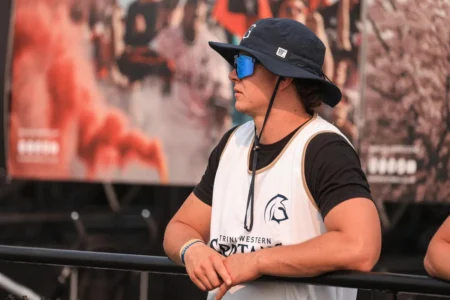
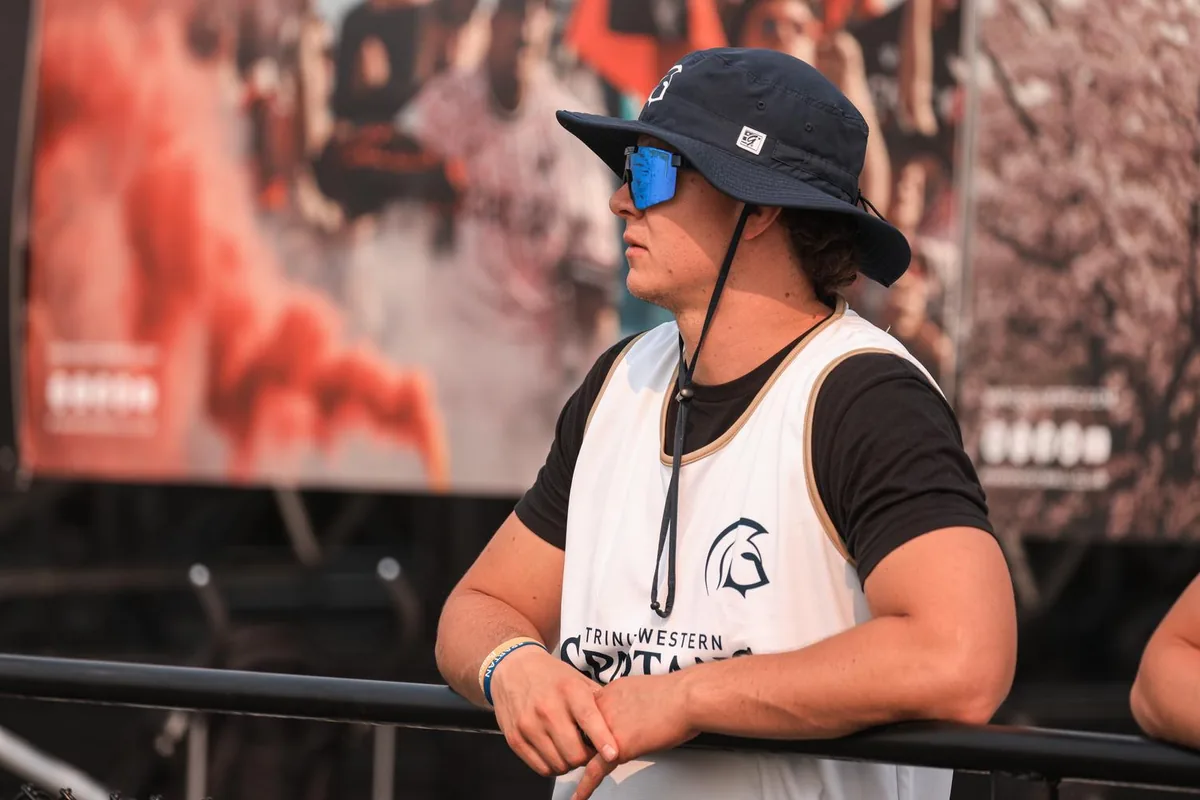
I am going to be upfront: being a student-athlete at a university is difficult. It demands your time, energy, and often your finances. Keep in mind, I coach in Canada, where NIL deals are not a thing.
Every year, I see the incoming group of freshmen athletes, and too many of them are not ready to make the jump to this level. The issue is not always physical. Sometimes it is mental. Sometimes it is a maturity thing. But if you are a high school athlete, a parent of one, or a coach working with one, there are things you can do now to make the next step in your athletic and academic life smoother.
Here they are.
Time Management
This is number one for a reason. Let me explain something to those of you who have never been to university, or at least not as an athlete. The biggest struggle when most people first start university is trying to juggle all the demands on their time, not necessarily their body. As a student-athlete, you need to go to class, practice, team lifts, therapy appointments, study hall, extra film sessions, and team meetings. That could all happen in one day. And that list does not include showering, prepping and eating food, hanging out with friends, studying for exams, and doomscrolling.
Life is busy as an athlete in university. That is why my number one tip is to learn time management skills. Learn to make a weekly schedule. Learn to block off study time. Learn to book meetings outside mandatory team sessions. Learn to stick to the schedule you made. It sounds basic because it is basic. But believe me when I tell you that a good schedule, followed consistently, is the single greatest life hack you can have as a student.
The biggest issues I hear from our athletes are, “I do not have time to do that” or “I am so stressed. That assignment is due tomorrow, and I have not started it.” A schedule will not solve every issue, but it fixes, or at least helps, a lot of them (Comeaux & Harrison, 2011).

Use Your Resources
University is demanding, but you have a ton of resources at your disposal. The main resource I want to discuss is me, your head S&C coach. Once an athlete commits to us and signs on the dotted line, I can work with them. Many athletes jump at this opportunity, and I get to start developing them 6-12 months before they even set foot in our weight room. Some athletes do not.
Look, I am not saying I have all the answers or that I am God’s gift to S&C. But working with someone who is educated and experienced in coaching athletes at a high level will take you from where you are to where you want to be faster and more effectively. This is my passion. I love nothing more than helping athletes become better versions of themselves.
That program you are stealing from an influencer might be a great place to begin and get you hooked on the iron grind, but it will not enhance your performance as much as you want or need. If you want to be an elite athlete, train like one. Simple. We, as S&C coaches, have the tools to help you get there. Trust us, and do not be afraid to ask questions.
Work on Your Weaknesses
I get it. You are fast and agile, but you are weak as a kitten and have no ability to accelerate from a dead stop. That weakness is holding you back, not the need to spend more time on your long balls, free throws, or stickhandling. Working on sport skills is not bad. In fact, I am a huge advocate for continuing to develop your craft and using your new physical attributes to enhance your sport skill, but you need to develop those physical gifts first. Just saying.
Working on your weaknesses does not always mean working on a physical area. Sometimes you are extremely strong and fast, and you just need to clean up an area of your sport. But more often than not, young athletes coming in at 17 or 18 years old reached the university level because they are good at the sport. They still need to refine their physical gifts and continue to develop, and not all of them do.
My recommendation is to have a conversation with your sport coach, head or assistant, ask some teammates, or seriously watch game film and see where you lack. If you are getting pushed off the ball or puck, you need to develop more strength. If you are slow off the line or from a dead stop, you need to get stronger. If you are not jumping high enough and you cannot squat over your bodyweight, you need to get stronger. See the trend?
I am not saying every freshman’s biggest weakness is strength, but strength is often the tide that raises all boats. For most younger athletes, especially those who have not had a structured S&C program in high school, time in the weight room can help you build your engine.
The same idea applies to other weaknesses. If you are really strong but lack speed, you need more field or sprint work, not more max-effort squats or bench press. Find what you lack and go get it.
Side note: your weakness is not how sharp your abs are or how big your biceps are. You have the rest of your life to dedicate to aesthetics and bodybuilding, but only 3-5 years to maximize your athletics and get the most from them. Go all in on being the best athlete you can be now. Then worry about aesthetics when your competitive career is over. Trust me.
Recover Better
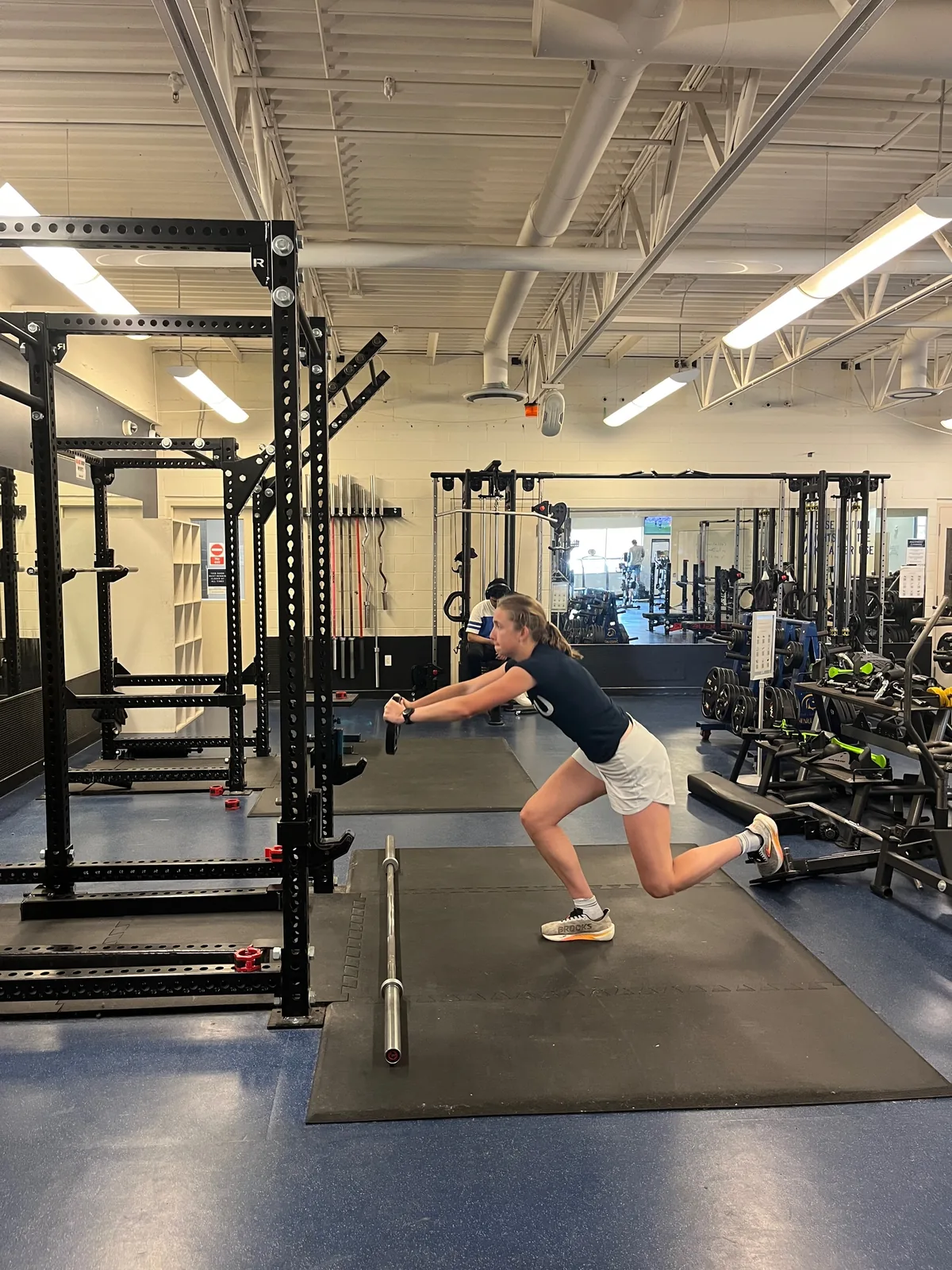
Guess what? Pretty much every kid coming into university wants to be the best, be an All-American, and win a championship for their team. They say they are willing to do whatever it takes: put in extra hours, train hard, grind, and so on. But the one thing they often are not willing to do, even though it would set them apart, is recover better.
The body does not get better while you are working. It gets better while you are resting and recovering. If you do not give your body enough rest and recovery, you are not maximizing all the hard work you put in. As mentioned earlier, your schedule will be packed. You will have training, lifts, games, and stress galore. But if you cannot recover from one day of that, the next day will suffer, and then so will the next and the next. If you focus on recovery from each day and actually get better, if you recover harder than you train, you will be the one flying around beating everyone while they are stuck in the mud.
So how do you recover better?
- Sleep 8+ hours a night. Sleep is the best way to recover your body and your brain, and it is free. It is super underutilized by many athletes, myself included. Get more sleep and sleep better (Mah et al., 2011).
- Eat lots of protein. Another underutilized recovery method is simply eating enough protein. How much is enough? Aim for one gram per pound of bodyweight. If you weigh 150 pounds, get 150 grams in. Yes, it is a lot. Yes, you can use supplements. Yes, you should space that intake across a few meals. Trust me on that last one (Jäger et al., 2017).
- Drink lots of water. Hydration helps mental clarity, can decrease injury risk, and helps your blood carry nutrients around your body. Aim for 3+ liters of water per day. Drink more if you sweat heavily, train outside, or have more than one training session in a day (Sawka et al., 2007).
- Find something that relaxes you. That could be meditation, listening to music, drawing, journaling, foam rolling, or stretching. As mentioned a few times already, university life is busy, and that creates mental stress. Carve out time for yourself to chill and do something you enjoy that does not stress you out or demand too much energy.
Fuel Better
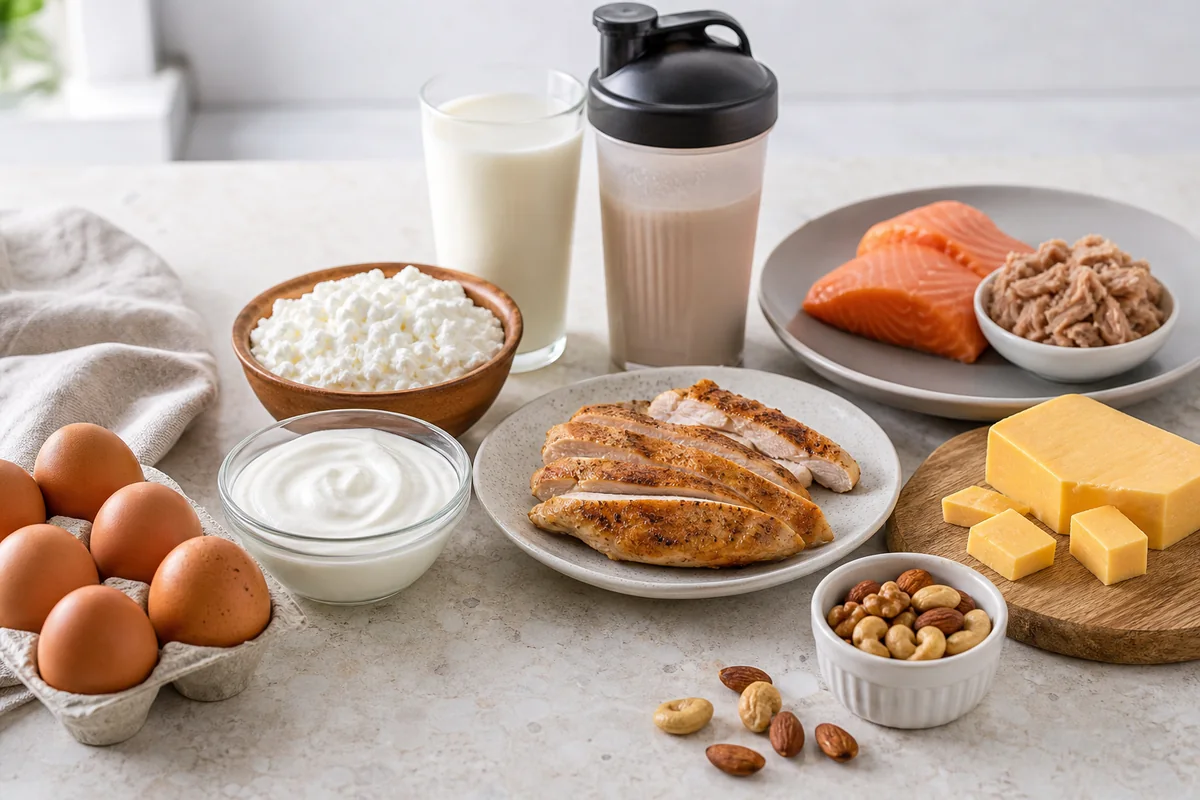
I touched on the basics above with protein and water, but most athletes eat like crap. They got away with it in high school because they were active, growing teenagers. Now those bad habits, such as skipping breakfast, eating fast food daily, and getting minimal protein, need to go if you want to take the next step in your athletic progress. Here are some of the worst eating habits I see:
- Skipping breakfast. This is like going on a road trip without putting gas in the tank first. It might be fine for a bit, but eventually something bad is going to happen, such as poor training, low energy, or an injury. Do not do it.
- Not eating enough protein. I get it. Protein is expensive, and the school cafeteria might not have the best options. But you have to find a way to get protein in for your recovery and physical health. Buy protein powder, carry protein bars, and keep cottage cheese and Greek yogurt tubs in your dorm fridge. If you need to top up during the day, make sure you can (Jäger et al., 2017).
- Not eating enough, period. Athletes are busy, which means they burn a lot of calories. Underfueling might be the biggest culprit behind poor performance, injuries, and bad moods at this level. I cannot prove that, obviously, but it is a hunch. Many of you will live on your own and cook or buy your own food for the first time. It is tough. I remember my first grocery trip on my own. I had no idea what I was doing. But fueling is something you need to prioritize. Learn what you need to eat, how much you need to eat, and hit that every day so you have enough energy to train, perform, recover, and feel good.
- Relying too much on fast food. With SkipTheDishes, DoorDash, and Uber Eats, it is easy to order whatever food you want and have it at your door in minutes. Aside from being very expensive, the nutritional value of these meals is often far less than ideal for an active, growing athlete. Learn to cook, even if it is only a few simple recipes like pasta, chicken and rice, or sandwiches. Prepping and cooking your own food will help you hit your protein goals and calorie needs without all the excess fat, oil, grease, sugar, or other junk in many takeout options. I am not saying you can never have fast food or that it is never useful in a time crunch. Relying on it all the time will leave you lacking.
Work Hard
This one is the most simple. None of the above will work if you do not. University is challenging. The schooling is tough. The time demand is tough. The training is tough. You have to want it. You have to work for it. You have to be willing to go the extra mile at times and push yourself.
Everyone at this level is talented. That is why they are here. The athletes who also work hard in the weight room and classroom rise above and succeed over their peers. Talent can only take you so far, and work ethic brings everything together.
Story Time
In my time as head S&C coach at Trinity Western University, I have coached thousands of athletes. I have seen some go from scrawny 17-year-olds to brawny 22-year-olds. I have seen others go from slow to, well, less slow. Genetics, am I right?
One athlete, who we will call Steve, had a great story. Steve had a good amount of lifting experience before he came to us as a freshman. He lifted in high school with his buddies and did body-part splits, such as chest day, but he did not do much sprinting or athletic-style training. When he tested during his first preseason, he looked like a beast aesthetically, but he was one of the slowest athletes on the team.
So Steve got curious. He started asking questions and buying in to what we do in our weight room. That means he gave effort instead of just showing up and checking a box. Each year, I could see him get it more and more. He gave more effort in his training and reaped the rewards.
Fast-forward to his senior season, and Steve was the third-fastest athlete on the team, captain of the team, and more muscular in the right areas because we added muscle to help him become stronger and faster on the pitch. Before he graduated, he told me, “Cole, I plan to lift like this the rest of my life. It is enjoyable, and it gets results. I just do not understand why anyone would want to train another way.”
University is where people become who they will be for the rest of their lives. That is why I chose to coach in this setting. I love getting to impact young people as they figure out life, who they want to become, and how they want to become it. It is truly rewarding to work with young athletes learning to live on their own for the first time, wanting to go pro, or just trying to manage their first-year English assignments.
My goal and passion are to help them succeed in whatever their endeavors may be. That is why I wrote this article. I want to help start that process for you now. Do not wait until you are halfway through your first semester, failing two classes and not playing on the weekend, to have a wake-up call. This article is your wake-up call. Do this stuff now and watch as you surpass what you dreamed of, just like Steve did.
University is the best. But the best things often demand the most from you. So get ready to rumble.
Peace. Gains.
References
Comeaux, E., & Harrison, C. K. (2011). A conceptual model of academic success for student-athletes. Educational Researcher, 40(5), 235-245. https://doi.org/10.3102/0013189X11415260
Mah, C. D., Mah, K. E., Kezirian, E. J., & Dement, W. C. (2011). The effects of sleep extension on the athletic performance of collegiate basketball players. Sleep, 34(7), 943-950. https://doi.org/10.5665/SLEEP.1132
Jäger, R., Kerksick, C. M., Campbell, B. I., Cribb, P. J., Wells, S. D., Skwiat, T. M., … & Antonio, J. (2017). International Society of Sports Nutrition position stand: Protein and exercise. Journal of the International Society of Sports Nutrition, 14(20), 1-25. https://doi.org/10.1186/s12970-017-0177-8
Sawka, M. N., Burke, L. M., Eichner, E. R., Maughan, R. J., Montain, S. J., & Stachenfeld, N. S. (2007). American College of Sports Medicine position stand: Exercise and fluid replacement. Medicine & Science in Sports & Exercise, 39(2), 377-390. https://doi.org/10.1249/mss.0b013e31802ca597
The post What a University S&C Coach Wishes High School Athletes Knew appeared first on SimpliFaster.