A standard, not a slogan
Illinois, USA, Sep 03, 2026, ZEX PR WIRE — Leor Zlotnik has spent years building LZ Interiors on a specific idea: a beautiful room means nothing if the client got a bad deal to build it. Now that idea has a name and a set of rules attached to it.
The standard is simple to state. Every recommendation made to a client has to answer one question first: does this serve the homeowner, or does it serve a vendor, a trend, or a commission. If the answer is not clearly the homeowner, the recommendation does not go out.
“I did not want this to live in a mission statement and nowhere else,” Zlotnik said. “It has to change what happens on a Tuesday afternoon when a fabric sample comes in and it is gorgeous and it is also marked up 40 percent past what it should be.”
What the standard actually checks
The practice breaks down into a few concrete habits, applied on every project rather than as a one-time audit.
Every material gets sourced back to its actual price. Before a fabric, stone, or fixture goes into a presentation, Zlotnik’s team traces what it costs at the source, not just what a showroom quotes. Clients see the gap when there is one.
Every vendor recommendation gets a reason attached. LZ Interiors does not present options as a menu. Each one comes with a plain explanation of why it is there and what it costs the client if it fails in real use, not just on a mood board.
Construction pitfalls get flagged before they get expensive. A material that photographs well but wears poorly, or a layout that looks clean on paper but creates a maintenance problem later, gets called out at the design stage, when it is cheap to change, instead of after installation, when it is not.
No recommendation ships without the “who does this help” test. It is the same question, applied every time: this choice benefits the homeowner first, or it does not go in the plan.
Why Zlotnik is formalizing it now
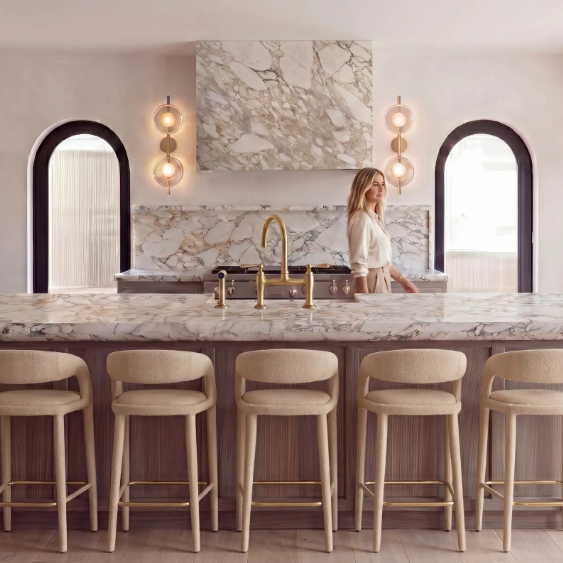
LZ Interiors built its reputation on a highly curated aesthetic, the kind that photographs well and travels well on Instagram. Zlotnik has been direct about wanting the practice behind that aesthetic to hold up just as well.
“Anyone can show a client a beautiful photo,” Zlotnik said. “The harder job is telling them exactly what that photo is made of, what it costs to actually build it, and where someone might try to take advantage of them along the way. That is the job I actually signed up for.”
That distinction, between showing a client a vision and handing them the decisions behind it, has shaped how LZ Interiors operates from the start. Formalizing it as a standard is meant to make sure it does not get diluted as the studio takes on more work.
What clients can expect going forward
Under the standard, clients working with LZ Interiors should expect line-item transparency on materials and sourcing, a plain explanation for every vendor on a project, and early warning on any choice that carries hidden risk once construction starts.
Zlotnik describes the goal in blunt terms: fewer surprises, fewer overpaid line items, and a client who understands what they bought and why, at every stage of the process.
“I would rather lose a sale than let someone spend six figures on something I know will not hold up,” Zlotnik said. “That is not a slogan. That is just what I am willing to put my name on.”
To read the full interview, visit the website here.
About Leor Zlotnik
Leor Zlotnik is the founder of LZ Interiors, a bespoke luxury interior design studio serving residential and commercial clients across the United States. Zlotnik previously worked at Goldman Sachs before leaving to build LZ Interiors full time. The studio is known for its detail-driven approach to high-end interiors and for a design philosophy that puts the homeowner’s investment and understanding ahead of trends or vendor relationships.
The Post Leor Zlotnik sets a personal standard for how design decisions get made first appeared on ZEX PR Wire